Stress has no warning. It shows up between meetings, in transit, when you wake up, or just when your body wants to settle down. At such moments, an anti-stress breathing exercise can be much more than a quick technique. It offers a way of returning to oneself, a space for immediate regulation, and sometimes the first step towards a deeper sense of calm.
We breathe without thinking about it. Yet when the nervous system is under pressure, the breath changes. It becomes short, high, sometimes restrained. The body stays alert, the mind races, and the feeling of inner security slips away. Returning to conscious breathing gives the body a simple yet powerful message: you can let go.
Why an anti-stress breathing exercise works so quickly
Breath is one of the few direct bridges between the body and the emotional state. When stress sets in, it activates age-old defense mechanisms. Heart rate quickens, shoulders tense, alertness increases. This response is useful in the face of real danger, but becomes exhausting when repeated throughout the day.
Conscious breathing helps reverse this movement. By slowing down the exhalation, giving more space to the diaphragm and bringing attention back into the body, we support the return to a calmer state. It’s not magic, and it’s not always instantaneous. But if properly guided, the breath can reduce the inner load in a matter of minutes.
There’s also a more subtle dimension. When you breathe consciously, you stop fighting what’s happening. You create the space to feel without being overwhelmed. For many people, this is precisely where change begins.
The simplest anti-stress breathing exercise
If you’re looking for a practice that’s accessible, gentle and effective, start by lying down and breathing out. This is often one of the most reassuring approaches for the nervous system, especially in times of mental overload.
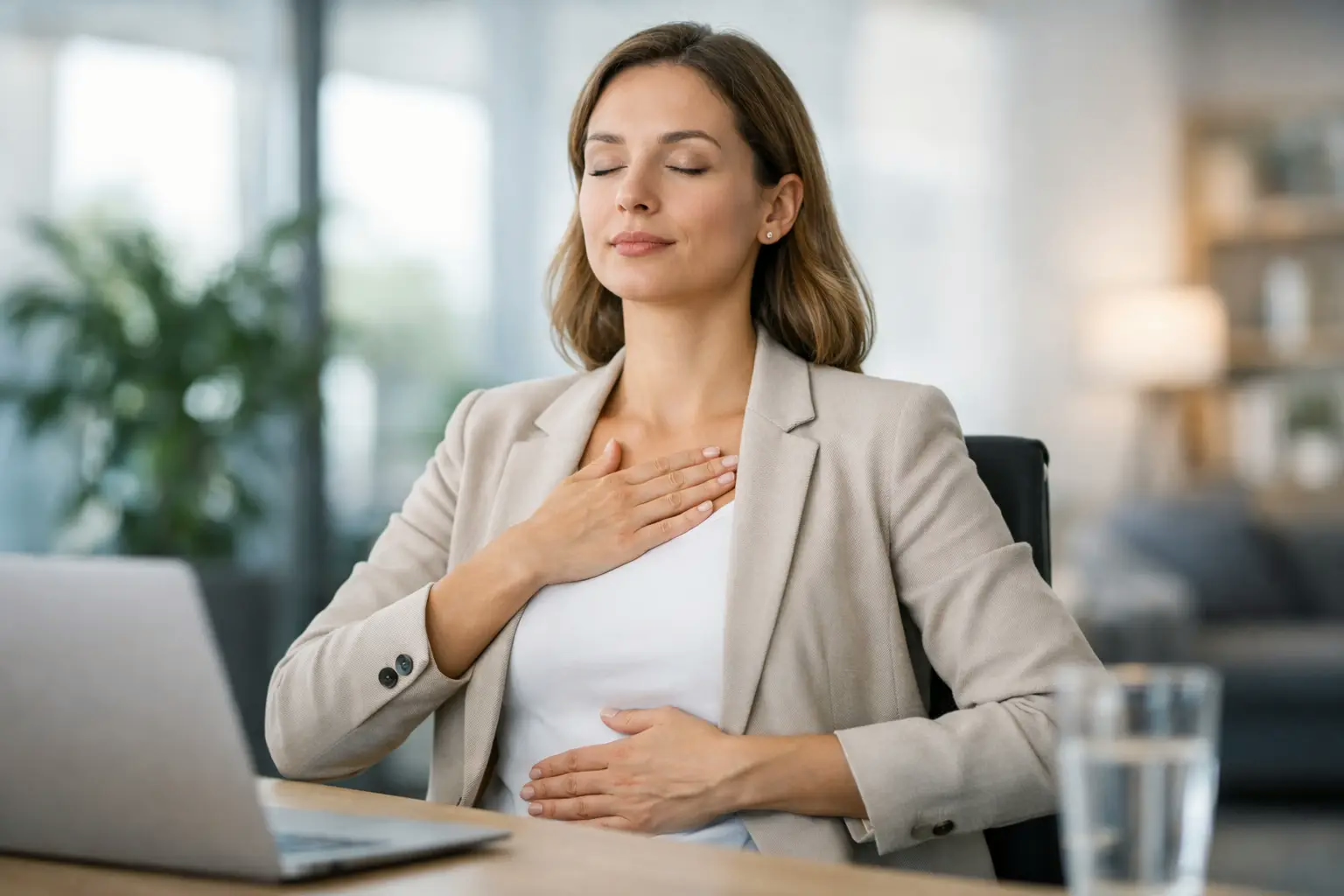
Sit or stand with your spine relaxed but open. Place one hand on your belly, the other on your chest if this helps you feel the movement. Inhale through the nose for 4 counts, without forcing. Then exhale slowly for 6 counts, still without pushing. Repeat this cycle for 3 to 5 minutes.
It’s not about performance. If counting stresses you out, drop the number and simply keep to the intention: an exhalation a little longer than the inhalation. The body likes regularity, not constraint.
As the cycle progresses, you may observe several signs of calming: the jaw loosens, the belly begins to move again, the inner rhythm slows down. Sometimes, the emotion rises a little before settling down. Again, this is normal. The breath restores movement where everything had frozen.
What to feel during practice
A good benchmark is not to breathe harder, but to breathe truer. The belly can inflate slightly on inhalation, then relax on exhalation. The shoulders, on the other hand, should remain as still as possible.
If you feel dizzy, restless or increasingly uncomfortable, return to natural breathing. Some exercises are excellent for one person and too stimulating for another. When it comes to regulation, there is no universal method. Above all, you need to listen carefully to the present moment.
When to practice for real effect
Many people only try out an anti-stress breathing exercise when they’re already at their wits’ end. This is useful, of course, but the effect is even more profound when practice becomes regular. The nervous system learns by repetition.
In the morning, a few minutes of conscious breathing can prevent you from starting the day in emergency mode. By mid-afternoon, they offer a real mental break. In the evening, they help bring down accumulated intensity. And in emotionally-charged periods, returning to the breath several times a day creates a form of inner stability.
It’s not necessary to isolate yourself for twenty minutes. Three minutes before an important meeting, five minutes after a tense discussion, or a few quiet cycles in the car before heading home can already make a noticeable difference.
Common mistakes that prevent relaxation
The most common mistake is to want to do things right. We puff out our chests, suck in too much air, look for an immediate result. The body, on the other hand, perceives this willpower as additional tension.
Another common misconception is that deeper breathing is always better. In fact, for some stressed or anxious people, breathing too deeply can accentuate discomfort. It’s better to look for gentleness, continuity and a sense of security.
It also happens that the mind remains very active during the exercise. This doesn’t mean that the practice isn’t working. Inner calm is not always total silence. Sometimes it’s simply the moment when we stop feeding the whirlwind.
Breathing and emotional release: what can emerge?
Stress isn’t just mental tension. It’s in the body, in breathing patterns, in the way we protect ourselves, hold on, control. That’s why a breathing exercise can sometimes bring up fatigue, sadness, irritation, or even a sudden need to cry.
There’s nothing abnormal about this phenomenon. Breath restores circulation to long-contracted areas. When space is recreated, what was contained can begin to release. This requires delicacy and discernment.
When practicing independently at home, it’s best to stick to simple, regulating and progressive exercises. More intense approaches, aimed at deep emotional release, are best experienced in a secure setting, with experienced guidance. This is where breathing becomes not just a tool for calming, but a genuine path to inner transformation.
How to integrate this anti-stress breathing exercise into your daily routine
For breath to become an ally, it must find its place in real life, not just in ideal moments. Choose a fixed time of day, even a very short one. Associate it with an existing habit, such as waking up, a tea break, or the moment just before going to sleep.
You can also create a little ritual. Close your eyes for a minute, place a hand on your heart, feel your support, then let the exhalation lengthen. This simple gesture changes the quality of your presence. It transforms an ordinary pause into a space for refocusing.
For some people, practice will be easier in silence. For others, a guided voice or accompaniment during the session will enable them to go further, with greater confidence. At Just Breathe Geneva, this dimension of the setting counts as much as the technique itself: the body relaxes more easily when it feels welcomed, respected and safe.
If you feel very anxious or exhausted
In periods of great nervous fatigue, it’s best to avoid rapid, intense or over-stimulating breathing. The system needs to be contained, not pushed. A gentle exhalation, a slow rhythm, and a return to simple sensations are often far more beneficial.
If you have a history of anxiety attacks, trauma or bodily hypersensitivity, listen to your own rhythm and don’t hesitate to ask for support. Breath is precious, but sometimes requires a real finesse of approach.
What this practice can change over time
At first, you’re looking for relief. Then, little by little, something deeper takes hold. We’re quicker to spot signs of overload. We recover more quickly after a busy day. We react less automatically.
This change is discreet, but powerful. It’s not about never feeling stress again. It’s about no longer being entirely governed by it. Conscious breathing doesn’t take away the demands of everyday life, but it does restore a center.
By returning to the breath, we develop a different quality of presence. More grounded. More stable. More tender towards ourselves. And it’s often here that you find lasting relief: not in the total erasure of tensions, but in the rediscovered ability to move through them without losing yourself.
If you don’t know where to start, start small. Three minutes. One hand on your belly. A longer exhalation. Sometimes it’s in this simple gesture that the body finally understands that it can stop fighting.